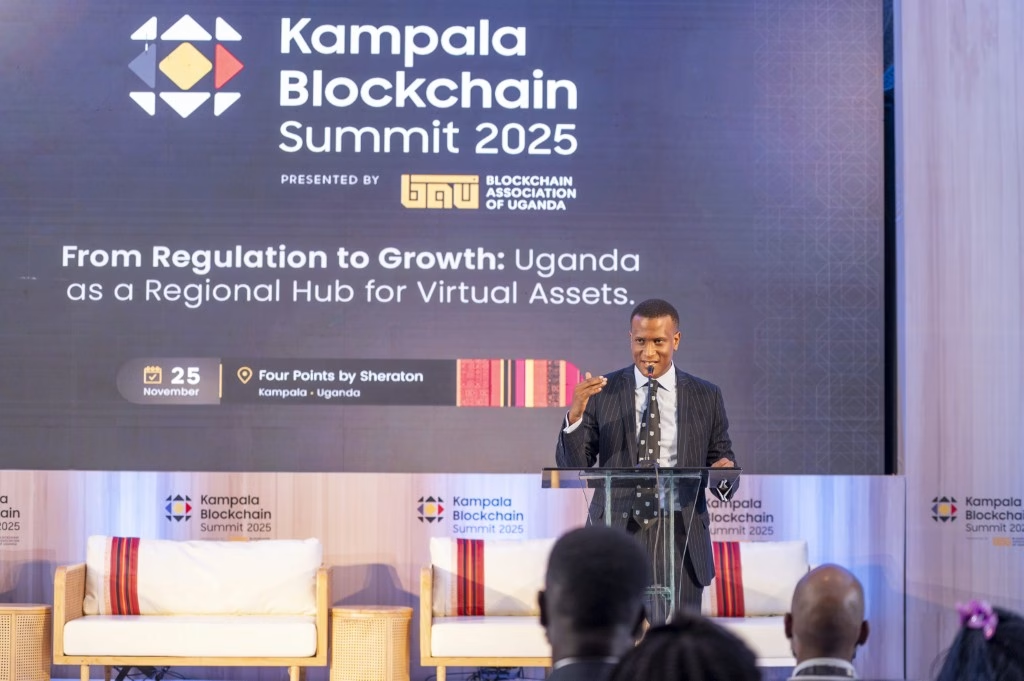
Today, at the Four Points by Sheraton in Kampala, something historic is happening. Dr. Micheal Atingi-Ego, Governor of the Bank of Uganda, is delivering the keynote address at the Kampala Blockchain Summit. His presence isn’t ceremonial. It signals Uganda is ready to move from conversation to action on virtual asset regulation.
This moment represents six years of patience and deep commitment from my predecessor and his team, and now from the team that I lead at the Association. Since 2019, the Blockchain Association of Uganda has engaged regulators not as adversaries demanding accommodation, but as partners seeking to build something unprecedented: a regulatory framework that protects consumers while enabling innovation. We didn’t push against skepticism—we listened to it, understood the mandate to protect consumers and maintain financial stability, and asked a simple question: can blockchain technology solve real problems for real Ugandans? Perhaps the fondest memory we have is a private dinner we held in 2022, where we invited the Deputy Governor of the Central Bank, now Governor—to discuss the path to regulation. This marked accelerated progress as he continued to pursue this relentlessly even at the highest level: the Financial Sector Stability Forum.

The answer, we’re discovering, is a resounding yes. And the timing couldn’t be more critical. Sub-Saharan Africa is experiencing a massive demographic transformation. Our region will grow from 10% to 25% of the global working-age population in coming decades. Sub-Saharan Africa will have more people of working age than China in approximately 10 years. But here is the reality we must confront: population growth alone doesn’t guarantee prosperity. We must dramatically increase productivity to harness this demographic dividend.
This is where emerging technologies like blockchain become not just interesting, but essential. When cross-border payments settle in seconds instead of days, when remittance costs drop from 7% to under 1%, when millions of unbanked Ugandans gain access to financial services through their mobile phones—these aren’t just technological improvements. They are productivity enhancements that help our economy grow faster than our population. They are the difference between demographic dividend and demographic disaster.
Our collaborative approach with regulators has yielded remarkable results. Today, Uganda’s progress on virtual asset regulation stands among the most comprehensive in Africa, built on unprecedented coordination across government. The Bank of Uganda established several technical working groups—not debating whether to act but determining how to act. The Capital Markets Authority launched its regulatory sandbox, providing pathways for companies to tokenize real world assets. Think about what this means: a Ugandan coffee farmer could own fractional shares in Kampala real estate. A young professional earning $400 monthly could invest $10 in a diversified commodity portfolio. This isn’t speculation—this is financial inclusion through technology.
Perhaps most significantly, the Financial Intelligence Authority developed Uganda’s Virtual Asset Risk Assessment Report, addressing the elephant in the room that has stalled regulation in many countries. By tackling money laundering concerns head-on through comprehensive assessment conducted per Financial Action Task Force recommendations, we opened space for responsible innovation. Uganda’s Cabinet discussed this report in September, paving the way for the development of a legal framework. You cannot build a legitimate industry on regulatory ambiguity—we’re building on solid ground.
Now, the Uganda Law Reform Commission has received Cabinet mandate to translate policy into legislation, executing regulatory principles and conducting a regulatory impact assessment. This isn’t bureaucratic delay—this is the proper process for creating durable, effective regulation that will withstand scrutiny and serve the public interest.
But let’s be honest about where we stand regionally. Uganda isn’t alone in this race. Kenya passed its Virtual Asset Service Providers Bill. Ghana expects its virtual asset bill by year-end and is already training practitioners—preparing the ecosystem before the law even takes effect. That’s regulatory sophistication. Rwanda announced frameworks for early 2025. Nigeria enacted crypto securities legislation earlier this year. The question isn’t whether East Africa will regulate virtual assets—that decision has been made across the region. The question is simpler and more urgent: which country will create the most accommodating, innovation-friendly framework?
Here’s where Uganda’s patient approach positions us to contribute meaningfully to Africa’s digital transformation. While our neighbors moved quickly—and we celebrate their progress—we moved thoughtfully. Six years of consultation. Every regulator engaged. AML/CFT concerns addressed systematically. Stakeholder consensus built methodically. This deliberate process means we can now learn from regional experiences and build frameworks that complement rather than merely replicate what others have done. If Uganda’s framework proves more accommodating, more comprehensive, and more business-friendly, it won’t be because we moved faster—it will be because we learned from those who moved first, listened to those who engaged deeply, and built something that serves not just Uganda, but the entire region. International companies establishing East African operations, regional trading infrastructure, African blockchain developers choosing where to build—these will flow to jurisdictions that demonstrate the strongest combination of regulatory clarity, market opportunity, and regional integration. The prize isn’t just being regulated—it’s contributing to Africa’s transformation in a way that demonstrates our capacity to lead through collaboration, learn through observation, and build through patient, deliberate action. When Uganda succeeds, East Africa succeeds. When East Africa succeeds, Africa succeeds. That’s the vision we’re building toward.
And the summit happening today demonstrates we are serious about contributing to this continental transformation. Following the Governor’s keynote address this morning, I’ll have the privilege of moderating a fireside chat between Dr. Atingi-Ego and Ms. Sylvia Mulinge, Chief Executive Officer of MTN Uganda, exploring how mobile money’s journey informs the path ahead for virtual assets. The parallels between mobile money’s journey fifteen years ago and the path ahead for virtual assets are profound: both technologies faced initial skepticism, both required patient stakeholder engagement, both promised to expand financial inclusion, and both needed regulatory frameworks that protected consumers while enabling innovation to flourish. We’ll also explore the evolution of currency itself, gold’s remarkable performance this year—particularly significant given that gold is Uganda’s top export—and the exciting opportunities to tokenize gold. These aren’t separate conversations; they’re interconnected pathways showing how emerging technologies can unlock value from Uganda’s existing strengths while building new economic infrastructure.
Speaking of tokenization, we’re privileged to hear from leading experts: Olivier Fines, CFA, and Urav Soni, co-authors of two pieces titled “An Investment Perspective on Tokenization – Part I & II” by the CFA Institute. We’ll also hear from Dramane Meite, CFA, of Hashdex, managing $1.5 billion in crypto assets, on how stablecoins can transform African payments and how traditional asset managers can prepare for the crypto era. We’ll convene regulators from the Financial Intelligence Authority, Capital Markets Authority, and Uganda Revenue Authority for critical discussions on balancing innovation with consumer protection. And we’ll unveil Uganda’s Virtual Asset International Financial Centre vision—not aspirational talk, but a concrete proposal with regulatory frameworks, infrastructure plans, talent pipelines, and tax incentives.
The theme of today’s summit—”From Regulation to Growth: Uganda as a Regional Hub for Virtual Assets”—isn’t aspiration. It’s a roadmap. Regulation provides the foundation. Growth follows from smart implementation. Hub status comes from being the best place in the region to build. Today, Uganda demonstrates we’re ready for all three.
Six years ago, we began conversations with regulators. Today, the Governor keynotes our summit. The conversation phase is over. The building phase begins now.
Reginald Tumusiime is President of the Blockchain Association of Uganda, CEO and Founder of CapitalSavvy, and an Aspen Africa-UK Catalyst Fellow. He began his career at Standard Chartered Bank and has spoken at international blockchain conferences in London, Dubai, and across Africa.